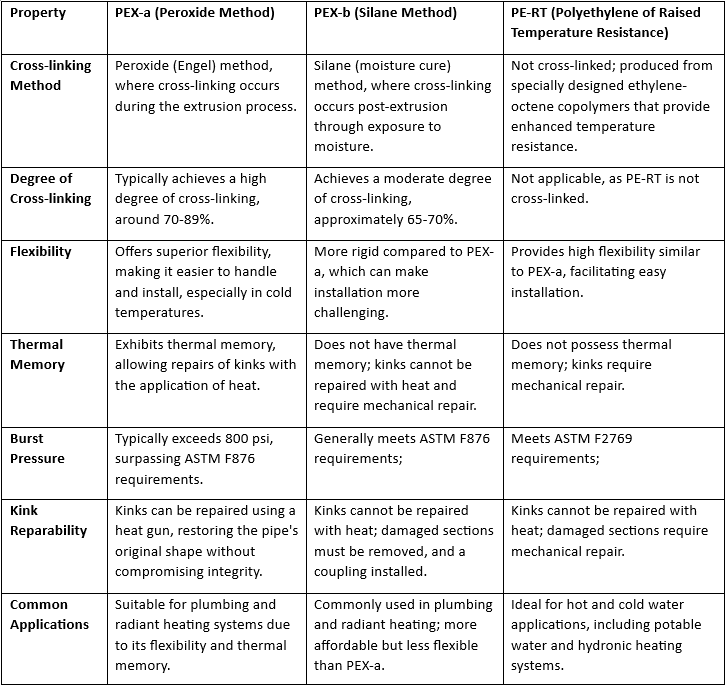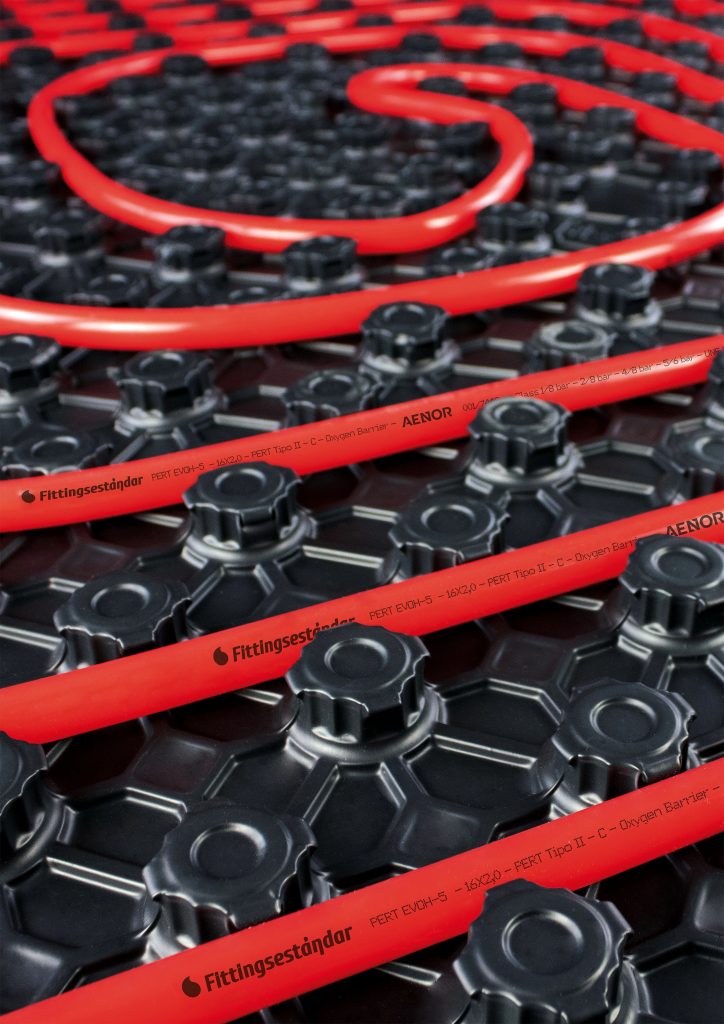
Cross-linked polyethylene (PEX) and polyethylene of raised temperature resistance (PE-RT) pipes are extensively utilized in plumbing and heating systems due to their flexibility, durability, and high-temperature resistance. Understanding the distinctions between PEX-a, PEX-b, and PE-RT, as well as the construction of three-layer and five-layer pipes, is essential for selecting the appropriate material for specific applications.
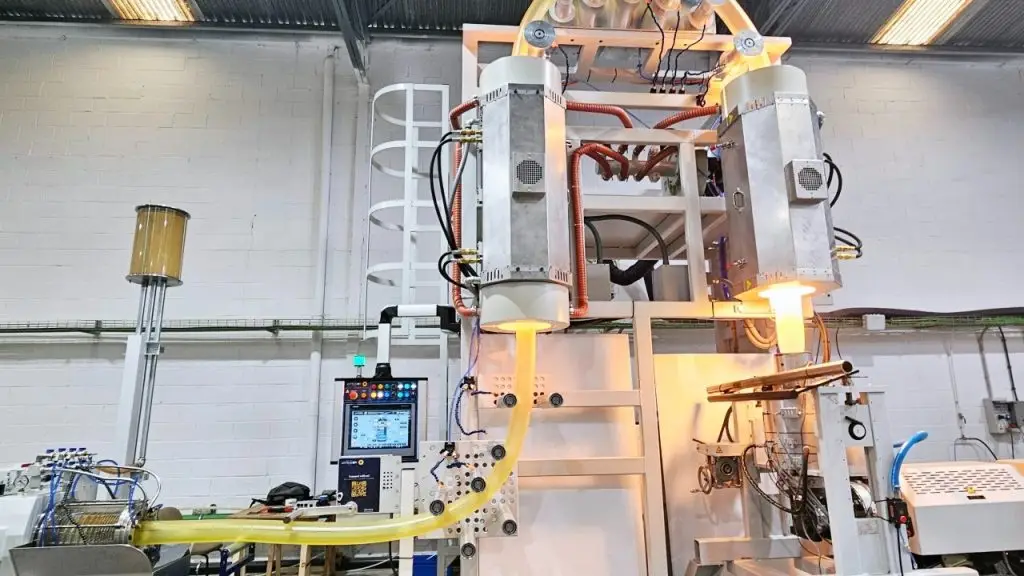
PEX-a is produced using the peroxide, method, which involves cross-linking polyethylene molecules during the extrusion process. This method results in a high degree of cross-linking, providing superior flexibility and thermal memory. Notably, kinks in PEX-a pipes can often be repaired with a heat gun, restoring their original shape without compromising integrity.
PEX-b is formed using the silane, or moisture cure, method, where cross-linking occurs after extrusion through exposure to moisture. This type is the most common PEX pipe available and is known for its affordability and high bursting pressure. However, PEX-b is more rigid compared to PEX-a and has a noticeable coil memory, which can make installation more challenging. Unlike PEX-a, kinks in PEX-b pipes cannot be repaired with heat and require the installation of a coupling.
PE-RT is a non-cross-linked polyethylene that has been modified to enhance its temperature resistance. It offers flexibility similar to PEX-a and is suitable for hot and cold water applications. PE-RT pipes are typically constructed with multiple layers, including an oxygen barrier layer to prevent oxygen diffusion, which is essential in heating systems to protect metal components from corrosion.
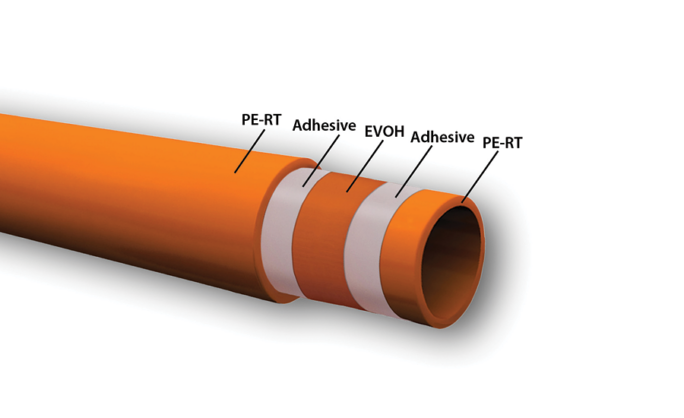
Both PEX and PE-RT pipes are engineered with multi-layer constructions to enhance their performance. These designs typically involve three-layer and five-layer configurations, each incorporating specific materials to achieve desired properties.
In three-layer pipes, the structure is as follows:
Inner Layer: Made of either PEX or PE-RT, providing flexibility and thermal resistance.
Middle Layer: An adhesive layer that bonds the inner layer to the outer layer.
Outer Layer: Composed of Ethylene Vinyl Alcohol (EVOH), which serves as an oxygen barrier to prevent oxygen permeation into the system.
This configuration ensures that the EVOH layer effectively reduces oxygen ingress, thereby protecting metal components within the system from corrosion.
Five-layer pipes build upon the three-layer design by adding additional adhesive and outer layers:
Inner Layer: Constructed from PEX or PE-RT.
First Adhesive Layer: Bonds the inner layer to the EVOH barrier.
Middle Layer: The EVOH oxygen barrier.
Second Adhesive Layer: Bonds the EVOH barrier to the outer layer.
Outer Layer: Made of PEX or PE-RT, providing additional protection and durability.
The five-layer construction offers enhanced protection for the EVOH barrier by encapsulating it between adhesive layers and the outer PEX or PE-RT layer. This design not only improves the pipe’s mechanical properties but also provides better resistance to physical damage during installation and operation.
Conclusion:
Selecting the appropriate pipe type depends on factors such as flexibility requirements, temperature and pressure conditions, and specific application needs. PEX-a offers superior flexibility and ease of repair, making it ideal for complex installations. PEX-b provides a cost-effective solution with high bursting pressure but is less flexible. PE-RT offers a non-cross-linked alternative with good temperature resistance and flexibility. Multi-layer pipes, particularly five-layer constructions, offer enhanced performance characteristics suitable for demanding applications.