
In this article, we will explore the essential aspects that can guide you toward selecting the right extruder machine for your specific requirements.
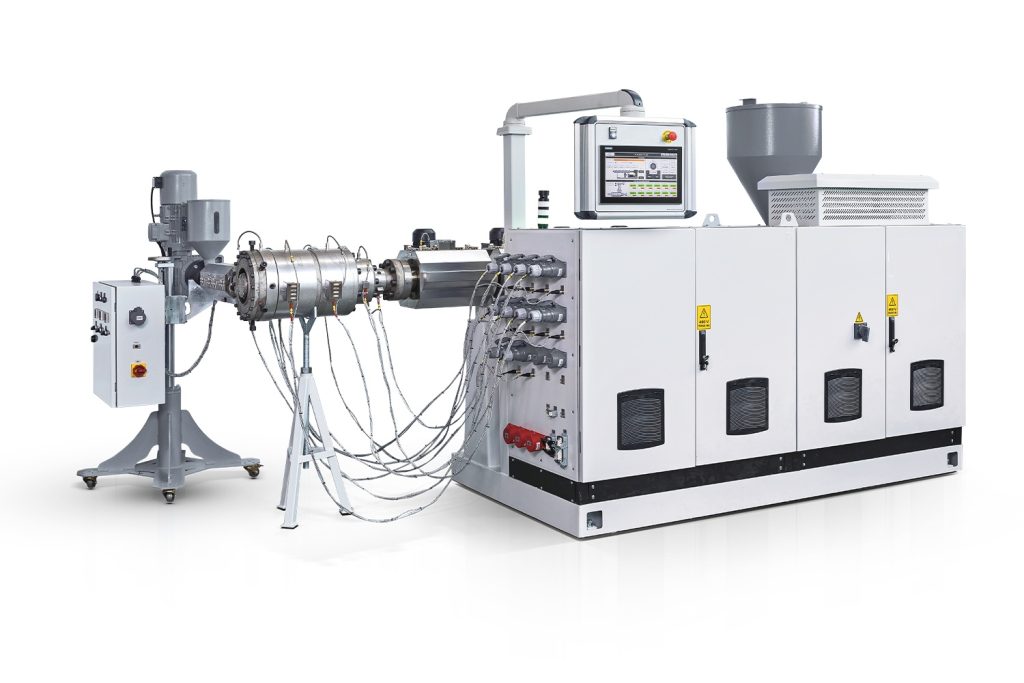
Investing in an extruder machine is a significant decision that can have a long-lasting impact on your production process. With numerous options available in the market, it’s crucial to understand the key factors to consider when purchasing an extruder. In this article, we will explore the essential aspects that can guide you toward selecting the right extruder machine for your specific requirements.
The first factor to consider is the capacity and output of the extruder machine. Determine the desired production volume and speed to ensure that the machine you choose can meet your production demands. Assess the extruder’s maximum output capacity in terms of kilograms per hour. Additionally, consider factors such as the type of material to be processed and the product specifications to ensure compatibility with the extruder’s capabilities.
Extruder machines come in various configurations, such as single-screw, twin-screw, and co-rotating or counter-rotating options. Each configuration offers unique advantages depending on the application. Evaluate the processing requirements of your products and choose a machine configuration that provides the necessary flexibility and performance. Consider factors like versatility, ease of maintenance, and the availability of interchangeable components for future adaptability.
The capacity of an extruder machine refers to its ability to process a specific volume of material within a given time frame, typically measured in kilograms per hour (kg/h). The screw design of the extruder plays a crucial role in determining its capacity. The screw is responsible for conveying, melting, and mixing the material through the extrusion process.
The size of the screw is another vital factor to consider when buying an extruder machine, as it directly influences the machine’s capacity. The screw size is typically defined by its diameter and length. A larger screw diameter allows for a higher volume of material to be processed per revolution, resulting in increased throughput and capacity. However, it is important to note that a larger screw may also require a corresponding increase in motor power and torque to drive the extrusion process efficiently.
Moreover, the length of the screw affects the residence time of the material within the extruder barrel. A longer screw provides a larger processing area, enabling better mixing, melting, and pressure build-up, which can be advantageous for certain materials or applications. However, it is essential to consider the material characteristics, processing requirements, and L/D ratio in conjunction with the screw length to ensure optimal performance and avoid over-extrusion or excessive residence time.
Finding the right balance between screw diameter, length, and other factors such as the L/D ratio, motor power, and material properties is crucial to achieving the desired capacity for your extrusion process. Consulting with extrusion experts or manufacturers can provide valuable insights into selecting the appropriate screw size that meets your production goals and ensures efficient and consistent output.
The L/D ratio, also known as the Length to Diameter ratio, is a critical parameter that varies based on the material being processed. The L/D ratio determines the degree of melting, mixing, and pressure build-up within the extruder barrel.
L/D ratio = Barrel Length (L) / Screw Diameter (D)
Different materials, such as PE, PVC, PERT, PP, and PEX, have varying melt characteristics and processing requirements. The appropriate L/D ratio for each material depends on factors like melt index, thermal stability, and shear sensitivity. Generally, higher L/D ratios are suitable for materials requiring thorough melting and mixing, while lower ratios are suitable for materials that are more shear-sensitive.
To accurately calculate the capacity of an extruder, you can perform tests at different RPM settings, like 50, 100, and 140, while keeping an eye on various factors. Start by collecting data on the weight of material that comes out of the extruder in one minute. It’s important to repeat these tests three times to get reliable results.
During the tests, pay attention to important parameters like the temperatures in each zones of the extruder, the motor power used (in kW), the pressure inside the barrel, and the materials used in the process.
You can easily get these measurements from the extruder’s control display, which ensures accurate data collection. For example, if you run the extruder at 120 RPM, while the motor is using 108 kW power, and get 7 kg of material in one minute, you can calculate the capacity like below:
7 kg × 60 min = 420 kg/hr
420 kg ÷ 108 kW = 3.8 kg/kW
It means that, in this specific extruder, the production of 3.8 kg of material requires the utilization of 1 kW. However, it’s important to note that the capacity of extruders typically does not behave linearly. Therefore, conducting tests at various RPMs is advisable to obtain a more accurate estimation of the capacity.
Motor drivers play a crucial role in controlling the speed and torque of the extruder’s motor. They provide precise control over the rotational speed of the screw, allowing for adjustments based on the material being processed and the desired output capacity.
Advanced motor driver systems offer features such as speed control, torque control, and closed-loop feedback mechanisms. These features enable the extruder to maintain consistent output and respond to variations in material properties or processing conditions. Additionally, motor drivers with energy-efficient algorithms can optimize power consumption, further enhancing the overall efficiency of the extrusion process.
The extruder gearbox is responsible for transmitting power from the motor to the screw, converting the motor’s high speed to the required screw RPM. It is essential to consider the compatibility between the gearbox, motor, and screw size. The gearbox should be capable of handling the torque requirements and RPM ranges specific to the extruder’s intended applications.
Furthermore, the connection type between the gearbox and the motor, as well as the gearbox and the screw, should be taken into account. Proper coupling mechanisms and secure connections ensure efficient power transmission, minimizing energy losses and maximizing the extruder’s performance.
The temperature control system is a crucial component of an extruder machine, responsible for maintaining precise temperature profiles throughout the extrusion process. It typically involves the use of resistances, often ceramic resistances, to provide the necessary heat for melting and processing the material.
Ceramic resistances are commonly employed in extrusion machines due to their excellent thermal conductivity, durability, and resistance to high temperatures. These resistances are strategically placed along the extruder barrel to create individual heating zones. By controlling the power supplied to each resistance, the temperature in each zone can be accurately adjusted and maintained.
To ensure efficient temperature control, the resistances are synchronized with cooling fans. These cooling elements help dissipate excess heat and prevent overheating of the extruder components. The combination of resistances and cooling systems ensure precise temperature regulation, promoting consistent and high-quality output.
Controlling the temperature control system is typically done through industrial PCs or programmable logic controllers (PLCs). These systems employ PID (Proportional-Integral-Derivative) programming algorithms for accurate temperature control. The PID programming continuously monitors the temperature in each zone using thermocouples, and based on the feedback, it adjusts the power supplied to the resistances to maintain the desired temperature setpoints.
Industrial PCs or PLCs provide a user-friendly interface for operators to monitor and adjust temperature settings. They offer flexibility, allowing for customization of temperature profiles, saving of preset recipes, and real-time monitoring of temperature trends. With advanced visualization and control capabilities, these systems enhance the efficiency and precision of the extrusion process.
Reliability is paramount when it comes to purchasing an extruder machine. Look for reputable manufacturers known for their high-quality equipment and reliable performance. Thoroughly research the manufacturer’s reputation, customer reviews, and industry certifications. A reliable extruder machine will ensure consistent production output, minimize downtime, and ultimately maximize your return on investment.
The importance of high-quality parts and reliable brands in extruder machines cannot be overstated. By choosing reputable manufacturers and investing in quality equipment, you can expect consistent performance, minimized downtime, and increased overall efficiency. This ensures a smooth and successful extrusion process, maximizing your productivity and return on investment.
Energy consumption plays a significant role in the operating costs of an extruder machine. Opt for energy-efficient models that are designed to reduce power consumption without compromising productivity. Look for features such as advanced control systems, efficient heating and cooling mechanisms, and optimized motor drives. Investing in an energy-efficient extruder not only benefits the environment but also results in cost savings over the machine’s lifespan.
To gain insight into the energy efficiency of an extruder, one of the simplest ways is to inquire with the manufacturer about their screw design and the approximate power required for each kilogram of material processed. By asking this question, you can better understand how efficiently the extruder utilizes energy during operation.
Consider the availability of maintenance services and technical support from the manufacturer or supplier. Adequate support ensures timely assistance in case of issues, minimizing production downtime. Additionally, inquire about the availability of spare parts and their cost. A reliable supply of spare parts is essential for the long-term maintenance and smooth operation of the extruder machine.
While cost is a significant factor, it should not be the sole determinant in your decision-making process. Analyze the long-term return on investment (ROI) rather than focusing solely on the initial purchase price. Consider factors such as energy savings, increased productivity, reliability, and the machine’s expected lifespan. A higher-quality, more efficient machine may have a higher upfront cost but can yield substantial savings and improved productivity in the long run.
Purchasing an extruder machine requires careful consideration of several important factors. By evaluating the machine’s capacity, configuration, quality, energy efficiency, maintenance support, and long-term ROI, you can make an informed decision. Remember to thoroughly research reputable manufacturers, seek expert advice, and assess your specific production requirements. By focusing on these key factors, you will be well-equipped to choose the right extruder machine that aligns with your production goals and ensures a successful investment in your manufacturing process.
Reach out anytime — we’re ready to support your project.